Electrical Safety • 2026-03-17
Your Electricians Are Working Alone. Do You Know Where They Are?
Your electricians work alone near live panels and in attics. Real-time visibility solves lone worker safety and schedule drift in one system.
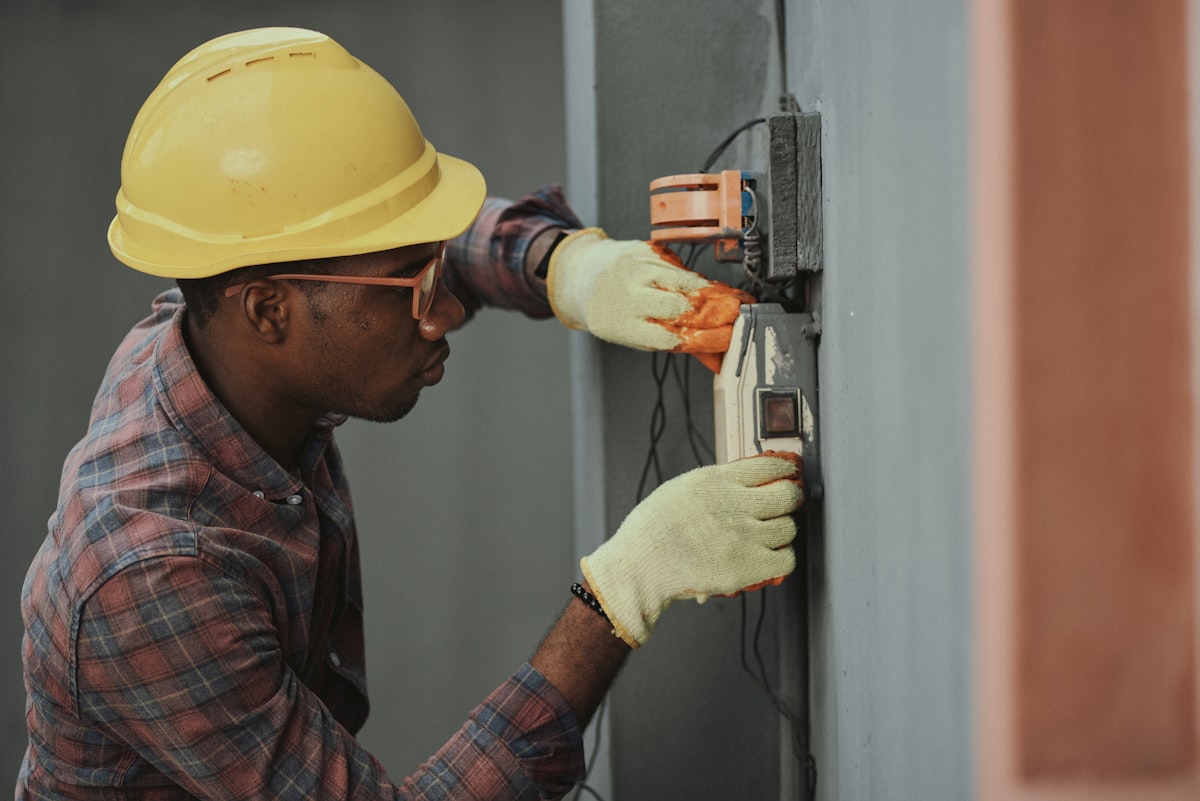
It's 3:40 PM on a Thursday. Your journeyman Dave was supposed to check in after a panel upgrade at a commercial site. That was over an hour ago. His next appointment is in 20 minutes, and the customer just called asking where he is.
You call Dave. Voicemail. You text him. Nothing.
Now you have two problems at once: a customer expecting someone who might not show up, and an electrician who's been working alone with live electrical and has gone silent for over an hour. Is he stuck in traffic? Did the job run long? Or is he hurt?
If you run an electrical contracting company, you know this feeling. It's not just a scheduling headache. It's the knot in your stomach when a guy working solo near high voltage goes quiet.
You shouldn't have to choose between running an efficient operation and knowing your people are safe. Both problems have the same root cause — and the same fix.
The Two Problems Nobody Talks About Together
Problem One: The Scheduling Guessing Game
Electrical work is unpredictable. A straightforward outlet install turns into a rewire when your tech opens the wall and finds aluminum wiring from 1972. A 45-minute service call becomes a two-hour diagnostic when the breaker panel tells a different story than the work order.
When jobs run long, everything downstream shifts. But you don't find out until the next customer calls wondering where your guy is.
Field service managers spend nearly half their day just tracking down crews. If you're running 5 to 15 electricians, that's you — burning hours on the phone instead of running your business.
Problem Two: Lone Workers and Real Risk
Electrical is different from most trades. Your guys aren't dealing with slow leaks or cosmetic issues. They're working with something that can kill in a fraction of a second.
Arc flash. Live panel work. Crawl spaces with limited visibility. Commercial jobs solo after hours. Residential attics in July where temperatures hit 130 degrees.
OSHA takes lone worker safety seriously, and electrical work consistently ranks among the most dangerous trades. The risk multiplies when someone is working alone.
Most companies handle it with a buddy system or a "call me when you're done" rule. But how often does that actually work? Someone forgets to call. You get busy and don't notice for an hour. That's not a safety system — that's a hope.
Why More Check-Ins Don't Solve Either Problem
The instinct is to add more manual check-ins. "Call the office when you leave each job." "Text me every hour." But your electricians aren't ignoring you — they're on a ladder with a multimeter in one hand and a wire nut in the other.
Adding more mandatory check-ins creates more things to forget, more interruptions during dangerous work, and more frustration for everyone. It doesn't solve the problem. It just adds noise.
What Changes When You Can Actually See the Field
Let's rewind that Thursday afternoon. It's 2:45 PM. You glance at your dashboard and see Dave is still on-site at the commercial job. He arrived at 1:00, so he's been there almost two hours. His next appointment is at 4:00, 25 minutes away. The system flags that he's going to be tight on time.
Option 1: You call Dave now, get a quick status, and reroute your apprentice Tony — who just finished early and is nearby — to cover the 4:00.
Option 2: You let the system auto-text the 4:00 customer with an updated ETA so they're not left wondering.
Now the safety side: that same dashboard shows Dave is active on the job. If he had gone silent — no movement detected — the system would flag it before an hour passes. You'd know something was off while there's still time to act.
How FieldBeacons Handles Both Problems at Once
Live location for your whole crew on one screen. Open your dashboard and see every electrician on a map, in real time. No calling around. No guessing.
Automatic status detection. The system knows when a tech is driving, when they've arrived on site, when they're active, and when they've been idle. No buttons to tap. No check-ins to remember.
Lone worker safety alerts. No panic button needed. FieldBeacons runs in the background and detects when a worker has gone inactive. If someone goes silent on a solo job, you find out in minutes — not hours.
Customer notifications go out automatically. When a tech is on the way, the customer knows. When a delay is detected, they get an update. This alone eliminates the majority of "where's my electrician?" calls.
Simple setup, same-day results. Your techs download the app on their phones. It runs quietly in the background. There's no training required, no complicated onboarding, and minimal battery impact. Most contractors are up and running the same day.
Three Things You Can Do This Week
1. Audit Your Lone Worker Exposure
Write down every solo job your electricians do this week. Panel upgrades, service calls, after-hours commercial work. Look at the list on Friday. That's your actual lone worker exposure — and it's probably bigger than you think.
2. Track Your Schedule Drift
Every time a job runs long this week, note it. Count the customer calls that come in asking where your tech is. By Friday you'll have a clear picture of how much time and goodwill you're losing to schedule drift.
3. Try It for a Week
FieldBeacons offers a free trial. Set it up before lunch, run it alongside your normal process, and see what changes. Most owners say the first time they catch a delay before the customer calls — or spot a lone worker who's been idle too long — it clicks.
Safety and Efficiency Aren't Separate Problems
Electrical contracting is one of the most dangerous trades and one of the most unpredictable to schedule. Those two things are connected. When jobs run long, the temptation is to rush. When the schedule is packed, corners get cut. That's when mistakes happen — and in electrical work, mistakes can be fatal.
Real-time visibility catches schedule problems before they cascade, reroutes crews before customers have to call, keeps customers informed automatically, and makes sure your lone workers are accounted for every single day. It's one system solving both sides of the problem.
Ready to see where your whole crew is, right now?
Get real-time visibility into your electrical field operations in minutes. No contracts, no hardware.
Book a Demo